
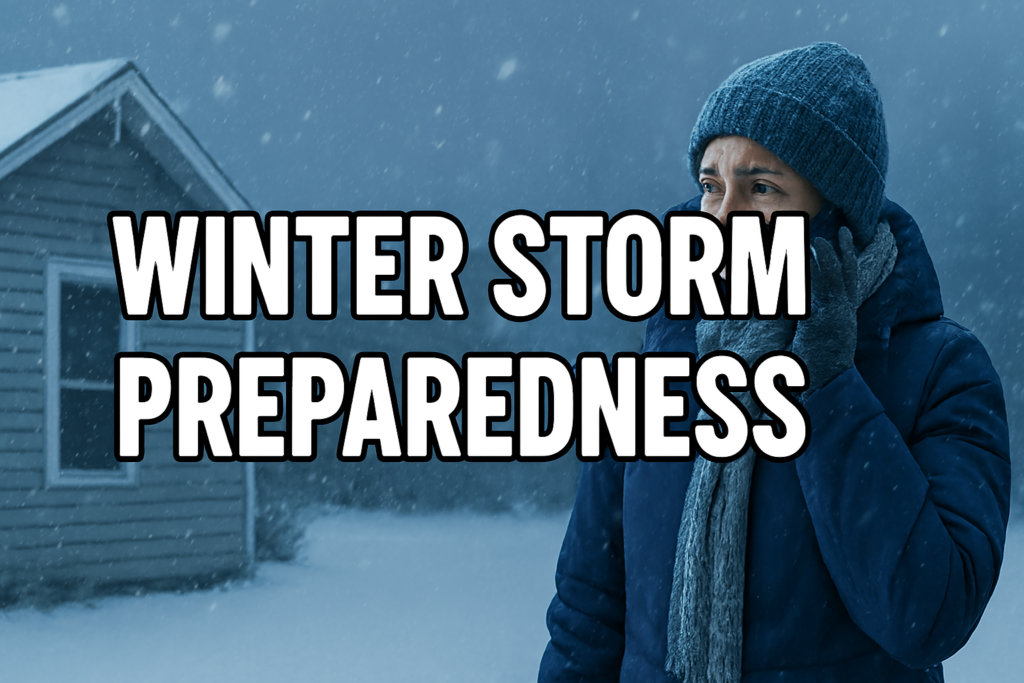
Winter storms bring extreme cold, snow, ice, freezing rain, and strong winds. They can disrupt power and communication services, block roads, and create life-threatening situations such as hypothermia and frostbite. Preparing in advance can save lives, protect your property, and reduce stress before and during a storm.
Understand Winter Storm Hazards
Winter weather hazards include:
- Heavy snow and blizzards: Reduced visibility and dangerous roads.
- Freezing rain and ice: Slick surfaces and weight on trees/powerlines.
- Extreme cold and wind chill: Increases risk of hypothermia and frostbite.
- Power outages: Can last hours or days after a storm.
Watch vs. Warning:
- A Watch means hazardous winter weather is possible; be ready.
- A Warning means dangerous conditions are imminent; take action.
For official definitions and forecasts, check NOAA’s weather alerts here:
👉 https://www.weather.gov/ready/winter-weather (Ready.gov)
Before the Storm: Planning & Preparation
A. Create an Emergency Plan
- Identify a safe place to stay if you lose power or heat.
- Discuss plans with family: where to meet and how to communicate.
- Designate someone responsible for checking weather updates regularly.
- Know how to shut off utilities like electricity and water if needed.
B. Build a Home Emergency Kit
Your kit should help you stay indoors for several days without power:
Essentials to include:
- Water (3–5 days per person)
- Non-perishable food and manual can opener
- Warm clothing, blankets, sleeping bags
- Battery-powered radio and extra batteries
- Flashlights
- First-aid kit
- Medications and supplies for infants, elderly, and pets
- Important documents (insurance, medical records) in waterproof container
👉 Ready.gov Winter Storm Checklist (PDF):
https://www.ready.gov/winter-weather
C. Prepare Your Home
- Insulate walls and attics; weather-strip doors and windows.
- Protect pipes from freezing by insulating them and letting faucets drip during cold weather.
- Check and service heating systems.
- Install smoke and carbon monoxide detectors with fresh batteries.
3. Preparing Your Vehicle
Even if you plan to stay home, winter travel might be necessary. Prepare your car so you are not stranded in freezing conditions.
A. Vehicle Maintenance
- Check tire tread and pressure.
- Fill windshield washer reservoir with winter fluid.
- Keep gas tank at least half full.
- Test battery, brakes, heater, defroster, and lights.
B. Emergency Car Kit
Carry items like:
- Fully charged cell phone & portable charger
- Blankets/sleeping bag
- Water and snack food
- Shovel and ice scraper
- Sand, salt, or cat litter (for traction)
- Jumper cables
- Reflective warning triangles or bright flag for visibility
During a Winter Storm
A. Stay Informed
- Monitor weather forecasts via radio, TV, or NOAA Weather Radio.
- Pay attention to alerts and warnings.
B. At Home
- Stay off roads if possible.
- Use alternative heating sources safely — never heat with an oven or indoor grill.
- Prevent carbon monoxide poisoning:
- Use generators outside and away from windows/doors.
- Install CO detectors.
C. If You Must Travel
- Drive slowly and cautiously.
- Avoid overpasses and bridges where ice forms first.
- Tell someone your route and arrival time.
- If you get stuck:
- Stay inside your vehicle
- Run engine only periodically for heat
- Keep exhaust pipe clear to avoid carbon monoxide buildup
Health & Safety Considerations
A. Hypothermia
Occurs when body temperature drops below normal. Signs include:
- Shivering
- Slurred speech
- Confusion
Seek medical help immediately if suspected.
B. Frostbite
Skin and underlying tissues freeze. Affected areas can turn white/gray and feel numb.
- Cover extremities with warm clothing.
- Warm the area gradually if frostbite occurs.
C. Helping Vulnerable People
Elderly, infants, people with health conditions, and pets are at higher risk in cold temperatures.
- Check on neighbors or relatives during extreme cold.
- Bring pets indoors and provide unfrozen water.
6. After the Storm
- Continue listening for updates on weather and road conditions.
- Check for damages and hazards around your home.
- Use caution when clearing snow and ice to avoid injury or overexertion.
- Restock your emergency supplies.
Preparing for winter storms is about anticipation, not reaction. By planning ahead (securing your home, vehicle, and family), you can minimize risks and stay safe even in the harshest conditions.