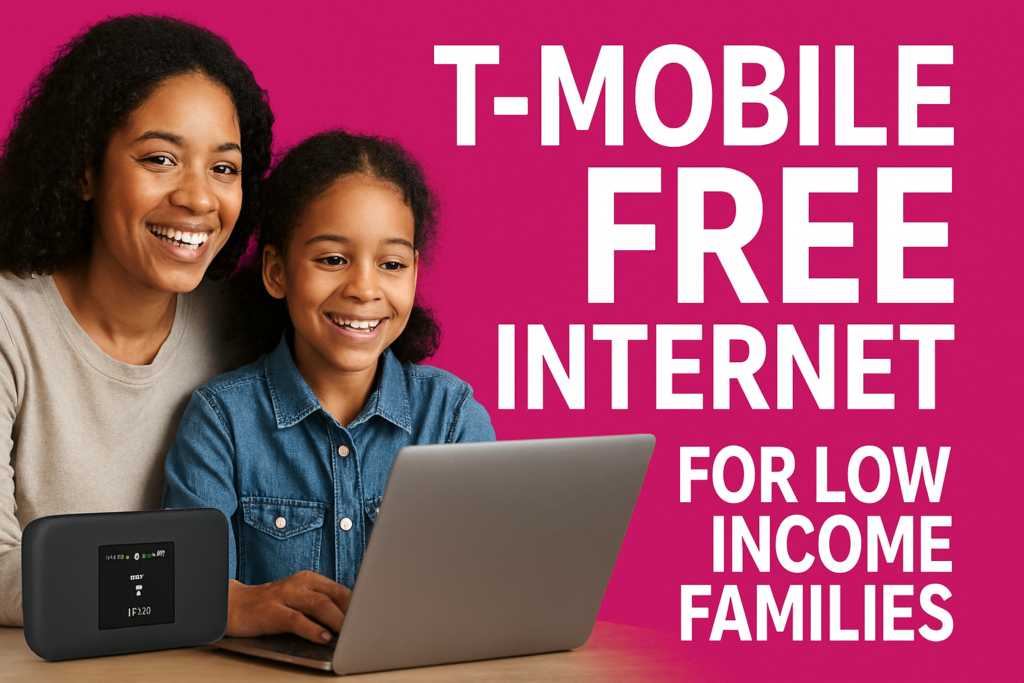
Many families need internet access at home for school, work, healthcare, and everyday tasks. However, the cost of internet can be prohibitively high for low-income individuals. T-Mobile, a major mobile phone and internet company in the United States, offers programs to help families connect for free or at a low cost. These programs are especially helpful for low-income families and students.
Project 10Million — Free Internet for Students
One of T-Mobile’s flagship programs is called Project 10 Million. This program provides free internet access to eligible students from low-income families.
How it works
Families with K-12 students (preschool through 12th grade) can get a free T-Mobile mobile hotspot.
This device creates a Wi-Fi connection that can be used at home.
Families receive 200 GB of free data per year, enough for homework, video calls, online classes, and research.
The hotspot service is free for up to five years for eligible students.
Who qualifies
To be eligible, a student must participate in certain government support programs, such as:
- National School Lunch Program
- SNAP/EBT
- Medicaid
- Other similar programs
Parents or guardians must provide proof of participation in one of these programs when applying for the service.
Additional Options
If a family uses up the 200 GB of free data before the end of the year, they can purchase an additional data pass for about $10.
Why It’s Useful
This free internet helps children complete online homework, join virtual classes, conduct research, and stay in touch with their teachers. For many low-income households without reliable internet access, this is a valuable educational tool.
Affordable Connectivity Program (ACP) — Past Help
Before 2024, T-Mobile participated in a federal program called the Affordable Connectivity Program (ACP). This government program helped low-income families with their monthly internet bills, sometimes offering the service for free or at very low prices with a monthly discount.
However, new applications for the ACP are no longer being accepted because the government discontinued it due to the end of funding. Families already enrolled may continue to receive benefits until the funds run out, but new enrollments are not possible.
Therefore, today, Project 10 Million is T-Mobile’s primary free internet program for low-income families with students.
Other Affordable Internet Options (Still Useful)
Although the ACP is ending, T-Mobile and other related brands have other programs that can help low-income families:
Lifeline Program: A government program that offers low-income families a discount on phone or internet service (not completely free, but much more affordable).
Discounted Plans: T-Mobile “Connect” or other low-cost plans may be available for families who don’t qualify for free service. If a family needs internet for work or home, these plans can be a practical and affordable option.
How to Apply
To get free internet through Project 10 Million, families can:
- Visit the official T-Mobile Project 10 Million website.
- Fill out an eligibility form for their student.
- Upload proof of enrollment in programs like SNAP, Medicaid, or free school lunches.
Once approved, T-Mobile will send a free hotspot device to the family’s home.
Why It Matters
Today, internet access isn’t just for entertainment. It helps children learn, families find jobs, adults attend online courses, and households access important services like telemedicine. For low-income families who can’t afford home internet bills, programs like Project 10 Million make a huge difference.
Summary
T-Mobile offers free internet to low-income student families through Project 10 Million. Students can receive a free hotspot and 200 GB of data per year for up to five years. The Affordable Connectivity Program (ACP) helped in the past, but new enrollments are no longer being accepted. Other low-cost options, such as Lifeline and T-Mobile’s budget plans, are still available for families.
FAQs
How to get free Wi-Fi with T-Mobile?
You can get free Wi-Fi with T-Mobile primarily through its In-Flight Connect benefit with partner airlines (such as Delta, Alaska, American, United, and Southwest). Sign in with your T-Mobile number after connecting to the airline’s Wi-Fi, or, if you’re an elementary or high school student in an eligible low-income household, by signing up for Project 10 Million. You’ll receive a free hotspot and data. T-Mobile also offers a free eSIM trial for non-customers to try its network.
How to use T-Mobile for free?
You can use T-Mobile for free through a 30-day T-Mobile Trial (formerly Network Pass) with your own eSIM-enabled phone to test its 5G network, or through Project 10 Million for eligible elementary and high school students looking for free internet. Other free perks, like T-Mobile Tuesdays, offer weekly gifts and discounts to existing customers with an eligible plan, accessible through the T-Life app.
What do you get for free with T-Mobile?
T-Mobile’s top freebies are offered through T-Mobile Tuesdays, accessible via the T-Life app. They offer weekly items like free food (slushies, sandwiches), discounts (gas, restaurants), movie tickets, and chances to win prizes, plus ongoing benefits like streaming (Hulu, Netflix with eligible plans) and international data/calling. New customers can also get free phones with bill credits or trade-ins, and same-day delivery is often available.
Is the hotspot free with T-Mobile?
The T-Mobile hotspot isn’t completely free; It’s a feature included in most phone plans that offers a fixed amount of high-speed data (like 5GB, 40GB, or more, depending on the plan) to share your phone’s internet connection. The speed drops significantly after that limit. However, programs like Project 10 Million offer free hotspots and data for eligible students. So, you pay for the phone plan, but there’s often no extra charge for using your phone’s built-in hotspot—just a data cap.