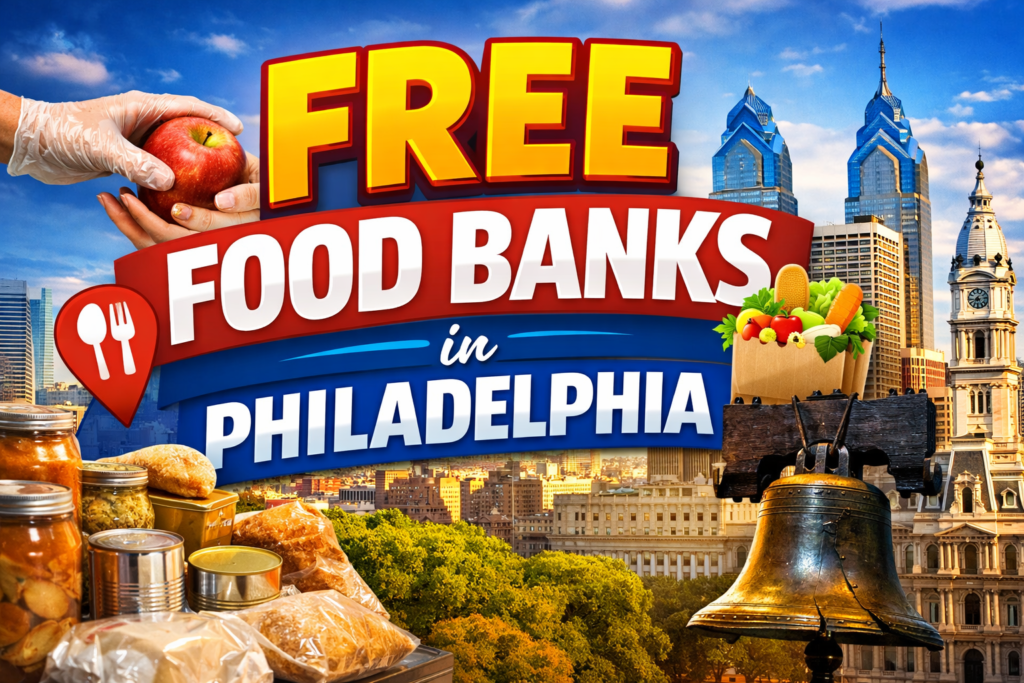
Many people in Philadelphia struggle to afford groceries due to unemployment, low wages, or unexpected financial problems. Food banks and food pantries help fill this gap by providing free groceries and meals to individuals and families in need.
Philadelphia has a large network of nonprofit organizations, churches, and community groups that distribute food every week. These programs help thousands of residents avoid hunger and provide essential support during difficult times.
This guide explains how free food banks work in Philadelphia, where to find them, and how you can apply for help.
What Is a Food Bank?
A food bank is a nonprofit organization that collects donated food and distributes it to local food pantries, soup kitchens, and community programs.
Food banks usually receive food from:
- Grocery stores
- Farms
- Food manufacturers
- Community donations
- Government programs
Local pantries then give the food directly to people in need.
In Philadelphia, food banks work with hundreds of community partners to distribute groceries across the city.
Major Food Banks in Philadelphia
Several large organizations manage food distribution in the Philadelphia region. These groups supply food to hundreds of smaller pantries and meal programs.
1. Philabundance
One of the largest hunger-relief organizations in the region is Philabundance.
- Founded in 1984
- Serves the Greater Philadelphia and Delaware Valley area
- Works with more than 350 community partners
- Distributes millions of pounds of food every year
Philabundance rescues food from grocery stores, farms, and restaurants and delivers it to local pantries and meal programs. Their mission is to reduce hunger and make healthy food available to everyone.
You can use their food locator tool to find nearby pantries and meal programs.
Website:
https://www.philabundance.org/find-food/
Example distribution location:
302 W Berks St, Philadelphia, PA 19122
2. Share Food Program
Another major food bank in Philadelphia is the Share Food Program.
This organization:
- Serves more than 1 million people each month
- Works with over 100 food pantries and distribution sites
- Provides groceries, school food programs, and senior meal boxes
Share Food Program partners with government programs like SNAP and USDA food assistance programs to distribute free groceries to families and seniors.
Website:
https://www.sharefoodprogram.org
They also provide food for schools and community groups across the city.
Free Food Pantries in Philadelphia
Besides large food banks, many smaller food pantries and community programs provide groceries directly to residents.
Here are some examples.
Philabundance Community Pantry
Address:
302 W Berks St
Philadelphia, PA 19122
Services include:
- Fresh produce
- Dairy products
- Meat and protein items
- Shelf-stable groceries
Distribution hours may change, so it is best to call ahead before visiting.
Community College of Philadelphia Food Resources
Many colleges in Philadelphia operate food programs for students and local residents.
The food collaborative at the college connects people to:
- Emergency food programs
- Free meal services
- Local food pantries
- Delivery services for groceries
These programs help students and nearby families who are struggling with food insecurity.
How to Find Free Food Near You in Philadelphia
The easiest way to locate nearby food banks is through official resource websites.
1. City of Philadelphia Free Food Finder
The city government offers an online tool to help residents find:
- Food banks
- Meal programs
- Grocery distributions
- Social services
You can search by ZIP code to find locations close to your home.
Visit:
https://www.phila.gov/services/mental-physical-health/find-free-food-or-meals/
2. PA 211 Help Line
Residents can also contact PA 211 for food assistance.
Options include:
- Call 2-1-1
- Text your ZIP code to 898-211
- Use their online resource database
A specialist can help you find nearby food banks and meal programs in your area.
Who Can Get Free Food from Food Banks?
Most food banks in Philadelphia have very simple eligibility rules.
You may qualify if you:
- Have low income
- Are unemployed
- Are homeless
- Are a senior citizen
- Are a single parent
- Are experiencing a financial emergency
Many pantries do not require proof of income. Some may ask for:
- Photo ID
- Proof of address
- Household size
Requirements vary by location.
Types of Food Assistance Available
Food banks in Philadelphia offer several types of help.
Emergency Food Boxes
These boxes contain groceries for several days or weeks.
Common items include:
- Rice
- Pasta
- Canned vegetables
- Soup
- Beans
- Cereal
- Peanut butter
Fresh Produce Distribution
Some food banks provide fresh fruits and vegetables from local farms and grocery stores.
This helps families access healthier food options.
Ready-to-Eat Meals
Soup kitchens and community meal programs offer hot meals for people who cannot cook at home.
These programs are common for:
- Homeless individuals
- Seniors
- People living in temporary housing
Senior Food Programs
Some food banks run special programs for seniors, such as:
- Monthly food boxes
- Nutrition support
- Home delivery services
Tips for Visiting a Food Pantry
If you plan to visit a food pantry in Philadelphia, keep these tips in mind:
- Check the schedule first – Many pantries operate only on certain days.
- Bring bags or carts – You may receive several items.
- Arrive early – Food distributions often serve people on a first-come basis.
- Call ahead – Some locations require appointments.
- Ask about other programs – Many pantries offer additional help like job services or SNAP assistance.
Other Places That Offer Free Food
Food banks are not the only option. In Philadelphia you can also get food from:
- Churches
- Community fridges
- Soup kitchens
- Nonprofit organizations
- Shelters
- School meal programs
These programs work together to reduce hunger in the community.
Final Thoughts
Free food banks in Philadelphia provide essential support for thousands of families every year. Organizations like Philabundance and Share Food Program distribute food across the city through hundreds of local partners.
If you or someone you know needs help, there are many resources available. Using tools like the city’s food finder or calling 211 can quickly connect you to nearby food pantries and meal programs.